
5 Essential Digital Prop Design Tips for Beginners
Did you know that 85% of designers consider prop design an essential element in creating an immersive visual experience? As a beginner in digital prop design, you're probably enthusiastic to create stunning props that transport audiences to new worlds. But where do you start? Mastering the fundamentals is key, and that's where we come in. From scaling and proportion to material authenticity and visual harmony, there are essential tips and tricks to elevate your designs. Get ready to take your prop design skills to the next level with our expert insights, and discover the secrets to crafting props that truly come alive.
Key Takeaways
• Ensure accurate scaling and proportion of props by considering environmental context and character interaction.
• Select vibrant colors and textures that adhere to Color Harmony principles and Material Authenticity.
• Master light and material interplay by controlling specular highlights and incorporating Fresnel effects.
• Add intricate details and patterns to enhance realism, establishing a consistent visual language and hierarchy.
• Balance prop design with dancer silhouette, ensuring visual harmony and narrative coherence without overpowering the dancer.
Understanding Prop Scale and Proportion
When designing digital props, you'll often find that a single misjudged measurement can throw off the entire aesthetic, which is why understanding prop scale and proportion is essential to creating believable and engaging environments.
Prop realism relies heavily on accurate scaling, as it directly affects the overall authenticity of your digital scene. To achieve prop realism, you must consider the environmental context in which the prop will exist.
This means taking into account the size and scale of surrounding objects, as well as the characters that will interact with the prop.
Selecting Vibrant Colors and Textures
As you explore the world of digital prop design, carefully selecting vibrant colors and textures is essential to creating visually striking and immersive environments that transport your audience.
When choosing colors, consider Color Harmony principles to make sure your palette is cohesive and engaging. You can use online tools to generate harmonious color schemes or experiment with different combinations to find what works best for your design.
In addition to color, textures play an important role in creating an authentic look. Material Authenticity is vital to making your props believable and realistic. Research reference images to understand the intricate details of real-world materials, such as wood grain or metal rust. Then, use this knowledge to craft textures that are both visually appealing and accurate.
Creating Realistic Shine and Reflections
Mastering the interplay of light and material is crucial for creating realistic shine and reflections that elevate your digital props from flat, lifeless objects to authentic, eye-catching elements that draw the viewer in. To achieve this, understanding how to balance specular highlights and Fresnel effects is vital.
4 Essential Tips for Realistic Shine and Reflections:
-
Specular Highlights: Control the intensity and spread of specular highlights to create a sense of realism. This can be achieved by adjusting the highlight's size, shape, and color.
-
Fresnel Effects: Simulate the way light interacts with different materials by incorporating Fresnel effects. This will help create a more authentic representation of shine and reflections.
-
Material Properties: Understand the reflective properties of various materials, such as metal, glass, or fabric, to create accurate and believable reflections.
- Lighting Control: Experiment with different lighting setups to achieve the desired level of shine and reflection. This can include adjusting the angle, intensity, and color of the light source.
Adding Intricate Details and Patterns
To enhance your digital props to the next level, you'll want to incorporate intricate details and patterns that add texture, depth, and visual interest. This is where micro details play a crucial role. By adding subtle nuances such as scratches, worn edges, or minute textures, you can create a sense of realism that draws the viewer in.
When it comes to patterns, developing a pattern language that's consistent throughout your design is vital. This language should be informed by the prop's purpose, material, and era. For instance, a futuristic sci-fi prop might feature sleek, metallic patterns, while a vintage-inspired prop might incorporate ornate, floral motifs.
To achieve a cohesive look, establish a clear visual hierarchy, balancing busy patterns with cleaner, simpler elements. This contrast will create visual tension, making your prop more engaging and dynamic.
Balancing Props With Dancer Silhouette
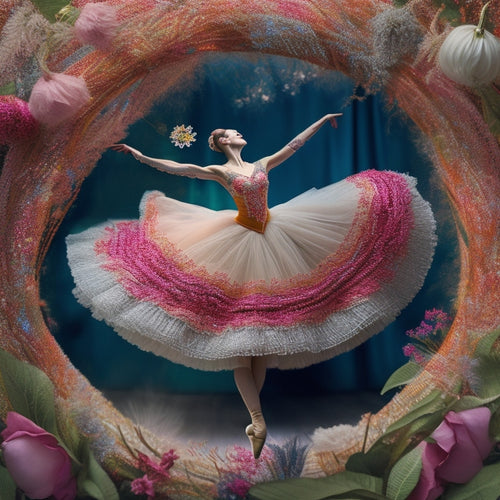
When combining digital props with dancer silhouettes, you're tasked with striking a delicate balance between visual harmony and narrative coherence. The goal is to create a visually stunning image that tells a story without overwhelming the viewer.
To achieve this balance, consider the following key factors:
-
Dancer Framing: Guarantee the prop doesn't overpower the dancer, and the dancer's silhouette remains the focal point. Experiment with prop placement and sizing to find the perfect balance.
-
Silhouette Contrast: Play with contrast to create visual interest. If the dancer is dark, use a light-colored prop, and vice versa. This contrast will create a visually appealing image that draws the viewer's attention.
-
Prop Integration: Seamlessly integrate the prop into the dancer's movement. This will create a sense of cohesion and harmony in the image.
- Negative Space: Don't forget about negative space. Leaving some areas of the image empty can create a sense of breathability and visual calm, allowing the viewer's eye to rest.
Frequently Asked Questions
How Do I Avoid Overwhelming the Dancer With Too Many Props?
As you choreograph, beware of prop clutter, which can distract from the dancer's focus. You're about to learn an important secret: limit props to 2-3 statement pieces, allowing your dancer to shine without visual overload.
Can I Use Real-World References for Digital Prop Design?
You can definitely use real-world references for digital prop design, drawing inspiration from photography and historical accuracy to create authentic, detailed designs that guarantee a safe and immersive experience for the performer.
What Software Is Best for Beginners to Create Digital Props?
As you explore digital prop design, you'll find that Blender and SketchUp are ideal software for beginners, balancing Design Principles with user-friendly interfaces, while avoiding Software Shortcomings like steep learning curves and hefty price tags.
How Do I Ensure Consistent Prop Design Across Multiple Scenes?
To guarantee consistent prop design across multiple scenes, you'll create a unified look by establishing a color palette, style guides, and asset management systems, while organizing your scene hierarchy to maintain visual coherence and efficiency.
Can I Reuse Digital Props From Previous Projects or Scenes?
You can definitely reuse digital props from previous projects or scenes by organizing them in a Prop Library, leveraging asset management best practices to guarantee easy access and consistency across your designs.
Related Posts
-

3 Ways to Monetize Your Dance Expertise Online
You can harness your dance expertise into a lucrative online business by leveraging your skills in three key ways. Yo...
-

Get the Dance Floor Popping: Wedding Flip Flops Sign
Create a memorable and entertaining wedding reception with a 'Get the Dance Floor Popping' flip flops sign that combi...
-
Dance Into Creativity With Ballerina Embroidery Pattern
Ignite your creative potential with the enchanting ballerina embroidery pattern, where artistry meets precision. This...
