
Master Solo Practice With These Essential Tips
You're one dedicated practice session away from unleashing your full belly dance potential! To master solo practice, start by setting up a comfortable and distraction-free space. Create a daily routine that works for you, with realistic goals and achievable milestones. Overcome self-doubt by incorporating mindfulness exercises and reframing your mindset to focus on progress over perfection. Master basic belly dance moves like arm waves, hip circles, and shoulder shimmies. Use online resources like virtual mentors and tutorials to enhance your skills. Now, take the next step and discover how to track your progress and stay motivated, and you'll be dancing your way to success in no time!
Key Takeaways
• Dedicate a specific area for solo practice, investing in ergonomic furniture and proper acoustic treatment for comfort and focus.
• Set realistic goals, breaking them down into achievable milestones, and celebrate achievements to maintain motivation and direction.
• Incorporate mindfulness exercises and fear journaling to overcome self-doubt and fear, reframing your mindset to focus on progress over perfection.
• Master basic belly dance moves, focusing on muscle control, body isolations, and fluidity, to build a strong foundation for further learning.
• Utilize online resources, including virtual mentors, tutorials, and online forums, to enhance your skills and connect with fellow dancers from the comfort of your own home.
Setting Up Your Practice Space
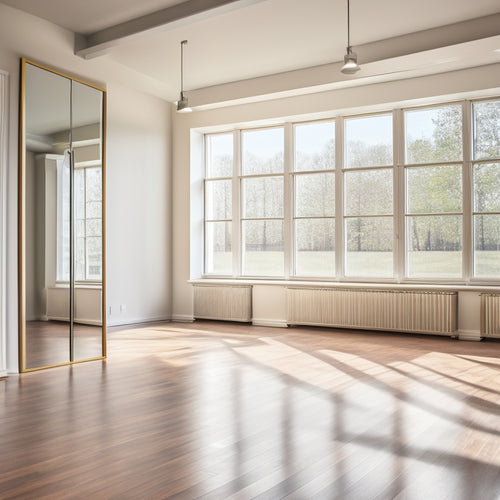
Set aside a dedicated area in your home or studio where you can focus on your solo practice without distractions or interruptions. This space will be your sanctuary, allowing you to fully immerse yourself in your craft.
When designing your practice space, prioritize comfort and safety. Invest in ergonomic furniture, such as a comfortable chair and a desk with proper height adjustments. This will prevent fatigue, discomfort, and even injury.
Next, consider the acoustics of your space. Proper acoustic treatment is essential for an ideal practice experience. Invest in sound-absorbing materials, like acoustic panels or soundproofing blankets, to minimize echo and reverberation. This will help you focus on your playing and reduce distractions.
Additionally, maintain good ventilation and sustain a comfortable temperature to keep you energized and focused.
Creating a Daily Practice Routine
When creating a daily practice routine, you'll want to start by setting realistic goals that challenge you without overwhelming you.
Consistency is key, so prioritize showing up every day, even if it's just for a short amount of time, rather than trying to cram all your practice into one or two marathon sessions.
Set Realistic Goals
Daily, you commit to carving out a specific time slot in your busy schedule to focus on solo practice, ensuring consistent progress and growth.
As you establish a daily routine, it's vital to set realistic goals that align with your objectives. Effective goal setting is fundamental to achieving success in solo practice. Start by identifying what you want to accomplish, whether it's improving technique, increasing speed, or mastering a new skill.
Break down your long-term goals into achievable milestones, creating a roadmap for success. This will help you stay motivated and track your progress. By setting realistic goals, you'll avoid frustration and disappointment, ensuring a safe and encouraging practice environment.
As you reach each milestone, celebrate your achievements and adjust your goals accordingly. By doing so, you'll maintain a sense of accomplishment and drive, propelling you towards mastery in solo practice.
Prioritize Consistency
By dedicating a specific time slot to solo practice, you create an unshakeable routine that fosters growth and propels you towards mastery. Consistency is key to improving your skills and developing muscle memory.
To prioritize consistency, you need to make time management a top priority. Identify a specific time of the day that works best for you and stick to it. It could be early morning, lunch break, or late evening - whatever suits your schedule.
Consistency breeds habit formation, and habits are the foundation of mastery. Aim to practice at the same time every day, even if it's just for 15-20 minutes. As you commit to your daily routine, you'll find your skills improving dramatically.
Remember, it's not about the quantity of practice, but the quality and consistency of your daily efforts. By prioritizing consistency, you'll be amazed at how quickly you can develop new skills and refine existing ones.
Overcoming Self-Doubt and Fear
As you stand in front of the mirror, instrument in hand, a familiar foe rises up to confront you: self-doubt, fueled by the fear of imperfection and uncertainty. This is an important moment in your solo practice, where you can either let fear take over or take control.
To overcome self-doubt and fear, try incorporating mindfulness exercises into your daily routine. Take a few minutes each day to focus on your breath, quiet your mind, and center yourself. This will help you develop a sense of calm and confidence that will translate to your practice.
Another powerful tool is fear journaling. Take a few minutes to write down your fears and doubts. What're you afraid of? What's holding you back? Writing down your fears can help you confront and release them.
It's also essential to reframe your mindset, focusing on progress rather than perfection. Remind yourself that it's okay to make mistakes – it's all part of the learning process. By acknowledging and addressing your fears, you'll be able to practice with more freedom and confidence.
Mastering Basic Belly Dance Moves
With every step, sway, and shimmy, you're building a strong foundation in belly dance, and mastering the basics is important for unlocking your full potential.
As you practice, focus on developing muscle control, allowing you to isolate specific body parts and move with precision. Body isolations are essential in belly dance, so practice moving your hips, chest, and arms independently.
Arm waves are a great way to add fluidity to your dance, so practice holding your arms relaxed and soft, with a subtle bounce.
Don't forget to incorporate hip circles, moving your hips in large, smooth circles. Chest pops are another vital move, where you quickly contract and release your chest muscles.
Shoulder shimmies add a dynamic touch, so practice relaxing your shoulders and letting them shimmy freely.
Using Online Resources Effectively
You can access a wealth of belly dance instruction and inspiration online, from video tutorials and virtual classes to dance communities and forums. With so many online resources available, it's essential to use them effectively to improve your solo practice.
Start by finding a virtual mentor, a belly dance instructor who resonates with your learning style and goals. Their online tutorials and classes can provide you with personalized guidance and feedback, helping you refine your technique and build confidence.
Take advantage of online tutorials that focus on specific skills or styles, such as shimmies, isolations, or folkloric dance. These targeted lessons can help you overcome challenging movements and improve your overall performance.
Additionally, participate in online forums and communities to connect with fellow dancers, ask questions, and learn from their experiences. By leveraging these online resources, you'll be able to practice more efficiently, stay motivated, and enhance your belly dance skills from the comfort of your own home.
Tracking Progress and Staying Motivated
Set specific, measurable goals for your belly dance practice, and track your progress to stay motivated and focused on your journey to mastery. By doing so, you'll be able to celebrate small victories along the way, which will keep you motivated and encouraged to continue improving.
| Goal Setting | Tracking Progress | Motivation Boosters |
|---|---|---|
| Identify specific skills to master | Use a progress journal to log practice sessions | Find an accountability partner for support |
| Break down large goals into smaller ones | Take progress photos or videos | Reward yourself with small treats or privileges |
| Create a practice schedule | Reflect on your progress through mindful reflection | Use habit stacking to build consistent practice habits |
Having a clear plan and tracking your progress will help you stay on track and motivated. By incorporating a reward system, finding an accountability partner, and using habit stacking, you'll be more likely to stick to your practice schedule and celebrate your successes along the way. Remember to be kind to yourself and acknowledge your progress, no matter how small it may seem.
Embracing Imperfection and Progress
Mastering belly dance requires embracing your imperfections and focusing on progress, not perfection, as the journey to mastery is just as important as the destination. As you practice, you'll encounter mistakes and setbacks, but prioritizing approaching them with self-compassion is crucial. Remember, every mistake is an opportunity to learn and grow.
When you make a mistake, take a deep breath and acknowledge it. Don't beat yourself up over it; instead, practice mindful reflection. Ask yourself what went wrong and how you can improve next time. This mindset shift will help you develop a growth mindset, where you focus on progress, not perfection.
Incorporate self-compassion strategies into your practice, such as speaking to yourself kindly and acknowledging your efforts. Celebrate small victories, no matter how insignificant they may seem. By doing so, you'll create a safe and nurturing environment that fosters growth and improvement.
Embrace your imperfections, and you'll be amazed at how far you'll progress on your belly dance journey.
Frequently Asked Questions
Can I Practice Belly Dance if I Have a Physical Disability?
"Absolutely, you can rock that belly dance floor! With accessible props and adaptive attire, you'll find ways to modify moves, ensuring a safe, fun practice that celebrates your unique style and abilities."
How Do I Deal With Distracting Noise at Home While Practicing?
When you're at home, you'll find that noise can be a major distraction. To combat this, you can invest in noise-cancelling headphones or use soundproofing materials to create a quieter space, allowing you to focus on your practice.
Can I Modify Moves to Accommodate My Body Type or Size?
"When life gives you lemons, make lemonade" - and in your case, modify those moves to fit your body type! Embrace Body Adaptations and Personal Styling, focusing on comfort and safety while practicing, and you'll be dancing like a dream in no time.
What if I Forget the Choreography or Sequence of Steps?
If you're worried about forgetting choreography or sequences, don't stress! You can use memory tricks, like associating steps with music phrases or creating choreography notes to help you recall the routine.
Do I Need to Invest in Expensive Belly Dance Costumes?
"A million sparkly costumes won't make you a great belly dancer, but a thoughtful Costume Budget will! Focus on Dance Authenticity, not pricey outfits; invest in a few quality pieces that make you feel confident and comfortable, and you'll shine!"
Related Posts
-

Why Makeup Artists Need Innovative Design Tools
You're pushing the boundaries of makeup artistry, and traditional tools are holding you back. Innovative design tools...
-
Tips and Tricks for Collapsible Ballet Bar Installation
To install your collapsible ballet bar, start by gathering essential tools like a drill, level, and measuring tape. M...
-

Explore Vibrant World of Online Dance Learning
The world of online dance learning offers an unparalleled domain of possibilities, where dancers of all levels can ac...
